Cost of MRI Scan Without Insurance: Your Essential Guide
cost of MRI scan without insurance

Cost of MRI Scan Without Insurance: Your Essential Guide

Unlock affordable MRI solutions and navigate healthcare costs with confidence, even without insurance.

Find Affordable MRI Now

Key Takeaways

  • ✓ MRI costs without insurance can range from $400 to $10,000+ depending on location, facility, and body part.
  • ✓ Cash pay discounts are often available and can significantly reduce the price compared to billed rates.
  • ✓ Shopping around and comparing prices from multiple facilities is crucial for uninsured patients.
  • ✓ Payment plans and financial assistance programs exist to help manage high MRI costs.

How It Works

1
Understand Your MRI Need

Before anything, confirm with your doctor exactly what type of MRI is needed (e.g., brain, knee, with or without contrast). This specificity is vital for accurate price comparisons.

2
Research and Compare Prices

Utilize online price comparison tools, call imaging centers directly, and inquire about cash pay or self-pay discounts. Don't be afraid to negotiate.

3
Explore Financial Assistance

Look into payment plans offered by facilities, patient advocacy groups, or pharmaceutical assistance programs if contrast is required. Many providers are willing to work with uninsured patients.

4
Confirm All Costs & Schedule

Before your appointment, get a written estimate detailing all potential charges, including radiologist fees and any contrast agents. Ensure there are no hidden fees.

Understanding the True Cost of MRI Scans for the Uninsured
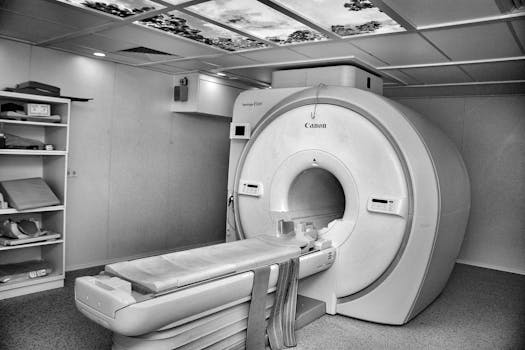
Black and white image of a modern MRI machine in a hospital room with overhead ceiling art. Photo: sirmudi_photography / Pexels
Magnetic Resonance Imaging (MRI) is a powerful diagnostic tool that uses strong magnetic fields and radio waves to create detailed images of organs and soft tissues within the body. It’s invaluable for diagnosing a wide range of conditions, from neurological disorders to musculoskeletal injuries and certain cancers. However, for individuals without health insurance, the prospect of needing an MRI can be daunting due to the perceived high cost of medical procedures. The reality is that the price of an MRI scan without insurance can vary dramatically, often ranging from a few hundred dollars to several thousand, depending on numerous factors. One of the primary drivers of cost variation is the type of facility where the MRI is performed. Hospital-based imaging centers typically have higher overheads and, consequently, higher prices than standalone outpatient imaging centers. This difference can be substantial, with a hospital MRI potentially costing two to three times more than the same scan at a dedicated imaging clinic. The specific body part being scanned also plays a significant role; a brain MRI or a multi-sequence spinal MRI, for instance, often costs more than a knee or shoulder scan due to the complexity and time involved. Furthermore, whether the MRI requires a contrast agent (an injection that enhances image clarity) will add to the overall expense, as the contrast material itself and the administration process incur separate charges. Geographic location is another critical factor. MRI prices can differ significantly from state to state, and even between cities within the same state. Urban areas with a higher cost of living and fewer competing imaging centers might see elevated prices compared to more rural or competitive markets. The technology of the MRI machine (e.g., 1.5T vs. 3T) can also influence pricing, with newer, higher-field strength machines sometimes commanding a premium, though this isn't always the case, as older machines can still be very effective and more affordable. It's essential for uninsured patients to understand these variables to effectively navigate the pricing landscape and find the most affordable option without compromising on quality or diagnostic accuracy. Being informed about these factors is the first step toward managing the financial burden of healthcare when you're paying out-of-pocket.

Strategies for Finding Affordable MRI Scans as an Uninsured Patient

Heap of similar American dollars in cash placed near blisters of expensive drugs on white table Photo: www.kaboompics.com / Pexels
When facing the need for an MRI without insurance, proactive strategies can significantly reduce your out-of-pocket expenses. The most effective approach is to become an informed consumer and actively shop around for the best price. Do not assume that the first facility your doctor recommends is the cheapest, especially if it's a hospital. Begin by contacting multiple outpatient imaging centers in your area. These facilities often specialize in diagnostic imaging and typically have lower operating costs than hospitals, allowing them to offer more competitive self-pay rates. When you call, explicitly state that you are an uninsured patient and are looking for the "cash pay price" or "self-pay discount." Many centers have a discounted rate for patients paying upfront without insurance involvement. Be prepared to provide the exact CPT code (Current Procedural Terminology) for your specific MRI, which your referring physician should be able to provide. This code ensures you are comparing apples to apples across different facilities. Ask for a complete breakdown of costs, including the MRI scan itself, the radiologist's interpretation fee, and any charges for contrast agents if required. Some facilities will bundle these, while others charge separately. Online price comparison tools and healthcare marketplaces can also be incredibly valuable resources. Websites and apps are emerging that allow you to enter your location and the type of MRI needed, providing price estimates from various local providers. These platforms often leverage data from past claims or direct negotiations with providers to give you a more transparent view of potential costs. Don't hesitate to negotiate. Healthcare pricing is rarely fixed, especially for uninsured patients. If you receive a quote, you can often ask if there's any flexibility or if they can match a lower price you found elsewhere. Some facilities might offer payment plans, allowing you to spread the cost over several months without interest, which can make a large bill more manageable. Remember, every dollar saved through diligent research and negotiation directly impacts your financial well-being.

Navigating Payment Plans and Financial Assistance for Uninsured MRI Costs

Unrecognizable medical worker demonstrating money wearing medicine form standing near white wall in hospital while working in day of salary Photo: www.kaboompics.com / Pexels
Even after diligent price shopping, the cost of an MRI scan without insurance can still represent a significant financial burden for many individuals. Thankfully, several avenues for financial assistance and payment flexibility exist, which can help make these essential diagnostic procedures more accessible. One of the first places to inquire about payment options is directly with the imaging facility itself. Many hospitals and standalone imaging centers understand the challenges faced by uninsured patients and offer various payment plans. These plans typically allow you to pay the total cost in smaller, manageable installments over a period, often interest-free. It's crucial to discuss these options upfront and get the terms of any payment plan in writing before your scan. Don't assume a plan will be offered; you often need to ask specifically about their self-pay payment arrangements. Beyond facility-specific plans, patient assistance programs can be a lifeline. These programs, often run by non-profit organizations or even pharmaceutical companies (especially if a specific contrast agent is needed), aim to help patients cover medical costs. While some are geared towards specific chronic conditions, others offer broader support for diagnostic imaging. A good starting point is to search for patient advocacy groups related to your suspected condition or general healthcare assistance organizations. Websites like NeedyMeds.org or patientadvocate.org often have databases of such programs. Hospital social workers or patient navigators can also be excellent resources, as they are usually well-versed in local and national financial aid options and can guide you through the application process. Another option to consider is applying for a medical credit card, such as CareCredit. These cards are specifically designed for healthcare expenses and often offer promotional periods with 0% interest if the balance is paid within a certain timeframe. However, it's vital to read the terms carefully, as high-interest rates can apply if the balance isn't paid off by the deadline. Lastly, some community health clinics or university hospitals have programs for low-income or uninsured individuals, potentially offering discounted services or referring to more affordable imaging partners. Exploring these diverse options can significantly alleviate the financial stress associated with the uninsured cost of healthcare.

Common Pitfalls and Best Practices When Seeking an Uninsured MRI

Close-up of a person taking notes in a notebook, writing a to-do list with a pencil. Photo: Ivan S / Pexels
Navigating the process of obtaining an MRI without insurance can be fraught with potential pitfalls, but by being aware of them and adopting best practices, you can ensure a smoother and more affordable experience. One common mistake is not getting a written price quote. Verbal quotes can be misinterpreted or forgotten, leading to unexpected bills later. Always request a detailed, written estimate that includes all potential charges, such as the scan fee, radiologist fee, and contrast agent costs. This protects you from hidden fees and provides leverage if there's a discrepancy. Another pitfall is failing to compare enough options. Settling for the first price you receive can cost you hundreds, if not thousands, of dollars. Aim to get at least three to five quotes from different types of facilities (hospital vs. outpatient, different locations) to truly understand the market rate. Also, be wary of facilities that are unwilling to discuss pricing upfront. Transparency is a good indicator of a patient-friendly facility. Best practices include: * **Be Specific with Your Request:** Provide the exact CPT code and whether contrast is needed. This helps facilities give you an accurate quote. * **Ask About All-Inclusive Pricing:** Inquire if the quoted price includes everything, or if there will be separate bills for the radiologist, contrast, etc. * **Leverage Online Resources:** Utilize websites like Healthcare Bluebook, New Choice Health, or Fair Health Consumer to get an idea of typical costs in your area. While these aren't always exact, they provide a valuable baseline. * **Consider Travel:** If you live close to a major metropolitan area or a less expensive region, it might be worth traveling a short distance for a significantly lower price. * **Document Everything:** Keep a record of who you spoke with, when, what was quoted, and any agreements made. This documentation is invaluable if issues arise. * **Don't Postpone Necessary Scans:** While financial concerns are valid, delaying a medically necessary MRI can lead to worsening conditions and potentially higher costs in the long run. Prioritize your health while diligently seeking affordable options. By avoiding these common errors and implementing these best practices, uninsured patients can significantly reduce the financial stress and ensure they receive the necessary diagnostic imaging.

Comparison

FeatureOutpatient Imaging CenterHospital Imaging DepartmentMobile MRI Unit
Typical Cost (Uninsured)$400 - $2,500$1,500 - $10,000+$500 - $3,000
Negotiation PotentialHigh (Cash Pay Discounts)Moderate (Financial Aid)High (Often Flexible)
Wait TimesShort to ModerateModerate to LongShort
Access to SpecialistsRadiologist interpretationAccess to hospital specialistsRadiologist interpretation
Payment Plans✓ (Often available)✓ (Often available)✓ (Often available)
ConvenienceOften easy parking, dedicated staffCan be complex to navigateCan be limited locations/hours

What Readers Say

"I needed a knee MRI without insurance and was dreading the cost. After calling several places, I found an outpatient center that offered a cash price of $650, which was thousands less than the hospital. So grateful for the transparency and savings!"

Sarah J. · Austin, TX

"My doctor ordered a brain MRI, and without insurance, I was looking at a huge bill. I used an online price comparison tool and found a standalone clinic offering a self-pay discount. It ended up being $800, which felt like a miracle compared to the $4000 quotes I got elsewhere."

Mark D. · Phoenix, AZ

"I had to get an MRI with contrast for my shoulder. The initial quote was astronomical. I negotiated with the imaging center, explained my situation, and they worked with me on a payment plan and a reduced cash price. It saved me over $1500."

Emily R. · Orlando, FL

"Finding an affordable MRI without insurance was tough. I eventually found a smaller clinic that offered a decent cash price, though it still felt expensive. The process was smooth, and the staff were understanding, which made a difference."

David L. · Denver, CO

"As a freelancer, insurance is tricky. When I needed a spinal MRI, I called about ten places. One facility was open about their cash prices and even offered a further discount for paying upfront. Their transparency about the cost of MRI scan without insurance was a huge relief."

Jessica M. · Seattle, WA

Frequently Asked Questions

What is the average cost of an MRI scan without insurance in the US?

The average cost of an MRI scan without insurance can vary widely, typically ranging from $400 to $10,000 or more. This broad range depends heavily on factors like the body part being scanned, whether contrast dye is used, the type of facility (hospital vs. outpatient clinic), and geographic location. Shopping around is essential for finding the best price.

Can I negotiate the price of an MRI if I don't have insurance?

Yes, absolutely. Many imaging centers and hospitals are open to negotiating prices for uninsured patients, especially if you're paying in cash or upfront. Always ask for the 'cash pay price' or 'self-pay discount' and don't hesitate to compare quotes from multiple facilities to leverage a better deal.

How can I find affordable MRI facilities in my area?

To find affordable MRI facilities, start by calling standalone outpatient imaging centers, as they generally have lower prices than hospitals. Utilize online price comparison tools and healthcare marketplaces. You can also ask your doctor if they have recommendations for cost-effective imaging partners.

Are there payment plans available for uninsured MRI costs?

Yes, many imaging facilities offer payment plans for uninsured patients to help manage the cost. These plans often allow you to pay the total amount in interest-free installments over several months. It's crucial to inquire about these options directly with the facility's billing department before your scan.

Is an MRI from an outpatient center as good as one from a hospital?

For most diagnostic purposes, an MRI performed at a reputable outpatient imaging center is just as effective and high-quality as one done at a hospital. Both types of facilities use certified technologists and radiologists to interpret the scans. Outpatient centers often specialize in imaging, offering efficiency and competitive pricing without compromising diagnostic accuracy.

Who should consider paying cash for an MRI?

Anyone without health insurance, or those with high-deductible plans who anticipate paying out-of-pocket, should strongly consider paying cash for an MRI. Cash prices are often significantly lower than the rates billed to insurance, as they eliminate administrative complexities and collection risks for the provider, translating to savings for the patient.

Are there risks associated with choosing a cheaper MRI option?

As long as you choose an accredited imaging center with certified technologists and board-certified radiologists, a cheaper MRI option doesn't inherently carry more risks. The quality of the scan and interpretation should remain high. The primary risk comes from choosing an unaccredited facility or one with outdated equipment, which is rare in the US for MRI services.

Will MRI costs continue to rise for uninsured patients?

While healthcare costs generally tend to rise, there's a growing trend towards price transparency and competition in diagnostic imaging, which may help stabilize or even reduce cash prices for MRI scans in some markets. Consumer demand for upfront pricing and the proliferation of outpatient centers are driving forces in this shift, offering hope for more predictable costs.

Don't let the lack of insurance prevent you from getting the diagnostic care you need. Understanding the true cost of an MRI scan without insurance and knowing how to navigate your options can lead to significant savings and peace of mind. Take control of your healthcare journey today.

Topics: cost of MRI scan without insuranceuninsured MRI costaffordable MRI optionsMRI pricing transparencycash pay MRI
Leo List
Brampton weed
Adultwork